
As a taxi price calculator, CabGrid Pro supports several different calculation models – that is the method used to look-up and calculate the price. This article describes each of those.
The calculation mode can be set globally under the OPTIONS tab on the CabGrid Pro admin page, or independently for each instance of CabGrid Pro on a website using the ‘layout’ shortcode attribute.
Layouts can be customised through CSS allowing the taxi price calculator to be styled to match any website. Out of the box, the built-in styling will automatically attempt to adjust for the space available to the calculator, whether it be full-width, side-bar widget or mobile device.
Jump to: Passengers & Luggage | Vehicles | Tickets | Time | Also see: Combined Layouts | Advanced price calculations
Not yet a CabGrid Pro user?
See how each CabGrid Pro layout works in our demo of the WordPress Admin Pages…
Passengers
(Number of Passengers & Luggage)
Passengers is the default mode and displays two input fields by default. These are, “Number of passenger” and “Number of luggage items” which allow customers to enter their own journey parameters.
In Passengers mode, the number of passengers and amount luggage input by the customer is used to look up a suitable vehicle from the vehicles table. This, in turn, identifies which price table is used. (Available vehicles can be limited independently for each CabGrid Pro instance using the vehicles shortcode attribute.)
The pick up (origin) and drop off (destination) locations selected are then used to look up the appropriate price from the vehicle’s price table. If the return option is enabled and selected, the return journey price is also looked up and combined with the outbound price to return a total price.
[cabGridPro layout="passengers"]
Vehicles
(Choice of Vehicle)
Vehicle mode displays a choice of vehicles in a grid with details of each vehicle. The appearance and information can be customised using CSS.
In Vehicle mode, the customer selects a vehicle that meets their needs from the vehicles displayed. The selection of vehicles can be limited independently for each instance of CabGrid Pro using the vehicles shortcode attribute.
The pick up (origin) and drop off (destination) locations selected are then used to look up the appropriate price from the vehicle’s price table. If the return option is enabled and selected, the return journey price is also looked up and combined with the outbound price to return a total price.
Since this mode does not require exact passenger or luggage numbers, it may be advisable to add custom form fields to collect this information on booking.
Also, if there is only one vehicle defined (in the CabGrid Pro WordPress Admin), it will be pre-selected by default. This may be useful if no vehicle/passenger input is to be displayed (or hidden using CSS).
[cabGridPro layout="vehicle"]
Tickets
(Number of tickets)
Ticket mode displays a number input field that expects the quantity of tickets (per passenger) to be entered. This mode is appropriate for municipal transport such as bus, coach or train services.
[In v5.0, Ticket mode can also be combined with the Vehicles layout to give a choice of vehicle.]
In Ticket mode, the number of tickets input by the customer is used to look up a suitable vehicle from the vehicles table. This, in turn, identifies which price table is used. (Available vehicles can be limited independently for each CabGrid Pro instance using the vehicles shortcode attribute.)
The pick up (origin) and drop off (destination) locations selected are then used to look up the appropriate ticket price from the vehicle’s price table – a vehicle with a greater capacity than the number of tickets required. If the return option is enabled and selected, the return journey price is also looked up and combined with the outbound price to return an initial price.
The initial price is then multiplied by the number of tickets entered. For example, if the initial journey price is $10.00 and the customer selects 3 tickets, the overall price will be $30.00 (3 x 10).
[cabGridPro layout="tickets"]
Note: CabGrid Pro v5 will make use of a new setting available via the _settings.php file or the Defaults Add-on plugin that will allow a custom formula to be applied when calculating a ticket price.
Example:$cabGridTicketFormula="*0.8";
If price per ticket is $10, 4 tickets would cost $10 + ((10 x 0.8) x3) = $34
Time
(Length of time – hourly rate)
Time mode displays a number input field that expects a time period to be entered. This mode is appropriate for tour or hire business types.
[From v5.0, Time mode can also be combined with the Vehicles layout to give a choice of vehicle.]
In Time mode, the length of time a vehicle is required for is input by the customer. The unit of time (minute, hour, day, etc.) is specified in the OPTIONS tab of the CabGrid Pro admin page. The time-unit box is only visible when Time mode is selected. This unit is not directly displayed in the interface by default, though it can be enabled through CSS. It may be advisable to give a written description of the calculator above it.
The number of passengers is also required. This is used to look up a suitable vehicle from the vehicles table which identifies which price table is used.
The passengers input field can be hidden through CSS. This may be useful if displaying separate CabGrid instances for each vehicle using the vehicles shortcode attribute. In cases where the passengers box is hidden and no vehicle limitations are set, the first vehicle price table will be used.
Specifying Rates and Calculations
The pick up (origin) and drop off (destination) locations selected by the customer are then used to look up the appropriate unit price. The return option is not enabled in this mode as it is considered irrelevant (time should include returning the vehicle).
 It is also possible to set a flat unit rate for each vehicle. The flat rate is entered in the VEHICLES tab under the [Unit] Rate column. This column is not visible by default. Click ‘Show unit rate column‘ to reveal it. If entered, this rate will be used instead of the value found from the origin and destination locations. (This feature requires CabGrid Pro v4.5.1 or more recent)
The unit price is then multiplied by the length of time entered. For example, if the initial unit price is $10.00 and the customer selects 3 units (hours, days, or what-ever is set), the overall price will be $30.00 (3 x 10).
In Time mode, the destination address in not mandatory on the booking form. Therefore it can safely be hidden through CSS if necessary. Note: The destination place must have a price defined in the PRICES table for the unit-rate to work, even though this value will be ignored.
[cabGridPro layout="time"]
Need a Hand?
Advanced Calculations
CabGrid prices can be manipulated further based on customer input. For example, adjusting prices based on number of passengers.
Latest CabGrid Pro Support Articles

CabGrid Pro 6 Licensing Guide
How do I find my license code? You can find and manage your CabGrid Pro licenses on your CabGrid account page. This includes your Licensed Email Address and Plan ID. My Licenses CabGrid v5 user? You can continue to use CabGrid version 5 and earlier on your site….

How to send a payment link with the booking acknowledgement message
Want to include a payment link in the booking acknowledgement email. There are number of ways you can construct a payment link and include it in the acknowledgement email. Here’s a couple of suggestions…
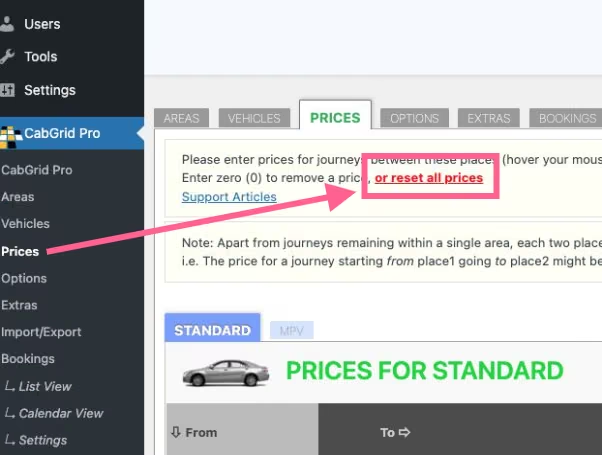
Reset all prices, places, vehicle or extras with one click
CabGrid Pro version 5.9.4 adds an option to reset all prices, places, vehicles and extras with one click.

Require Payment After Taxi Booking Submitted
Want to make payment mandatory when a customer submits a taxi booking request in CabGrid Pro? This is something occasionally requested by our users. Unfortunately, this is not directly possible. However, we have some suggestions…

Airport meet and greet name plate print out with your logo
The Nameplate feature is part of the CabGrid Booking Management Add-on. The NAMEPLATE button is located in the MANAGE column next to each booking. If the CabGrid Driver add-on is installed, a driver will receive a link to the nameplate page for that booking when…
Logo Image
The logo field in options allows a company logo to be specified. This is to be used in default/generic emails and other places across the system – such as the airport greeting card.

Booking Reference Seed
The Booking Reference Seed option allows you to define or adjust the booking reference assigned when a booking is requested.
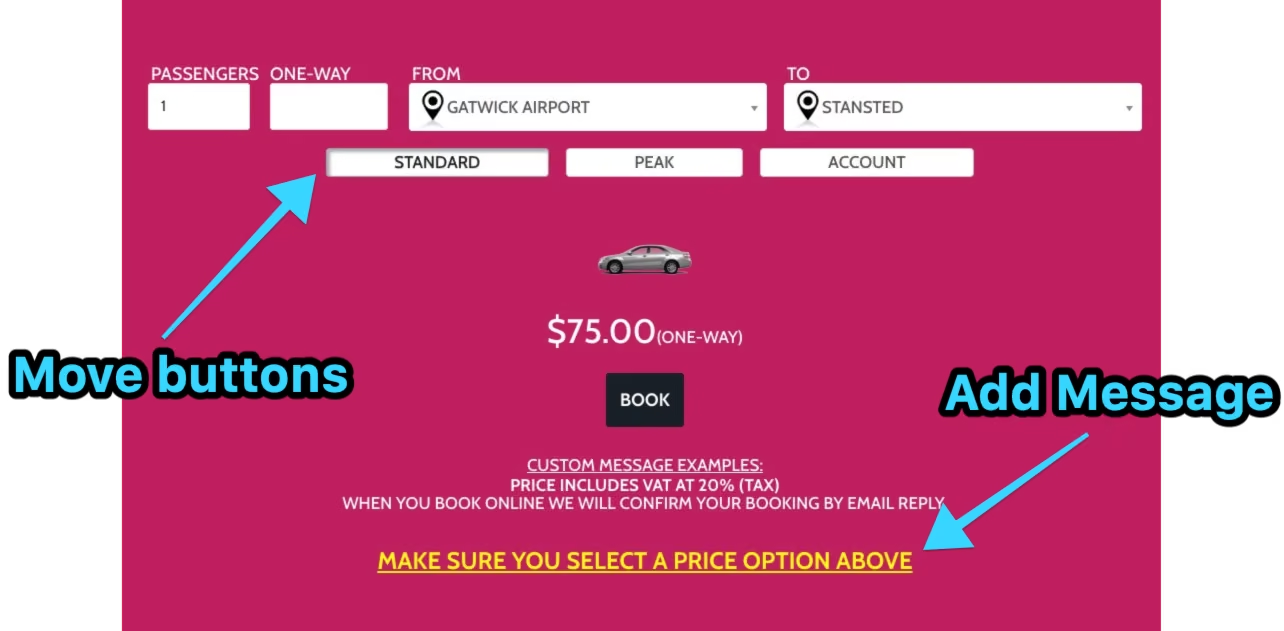
Highlighting Price Variation Options
Whilst CabGrid cannot currently automatically update the price based on booking form input, we have some recommendations for drawing your customer’s attention to the price variation buttons…
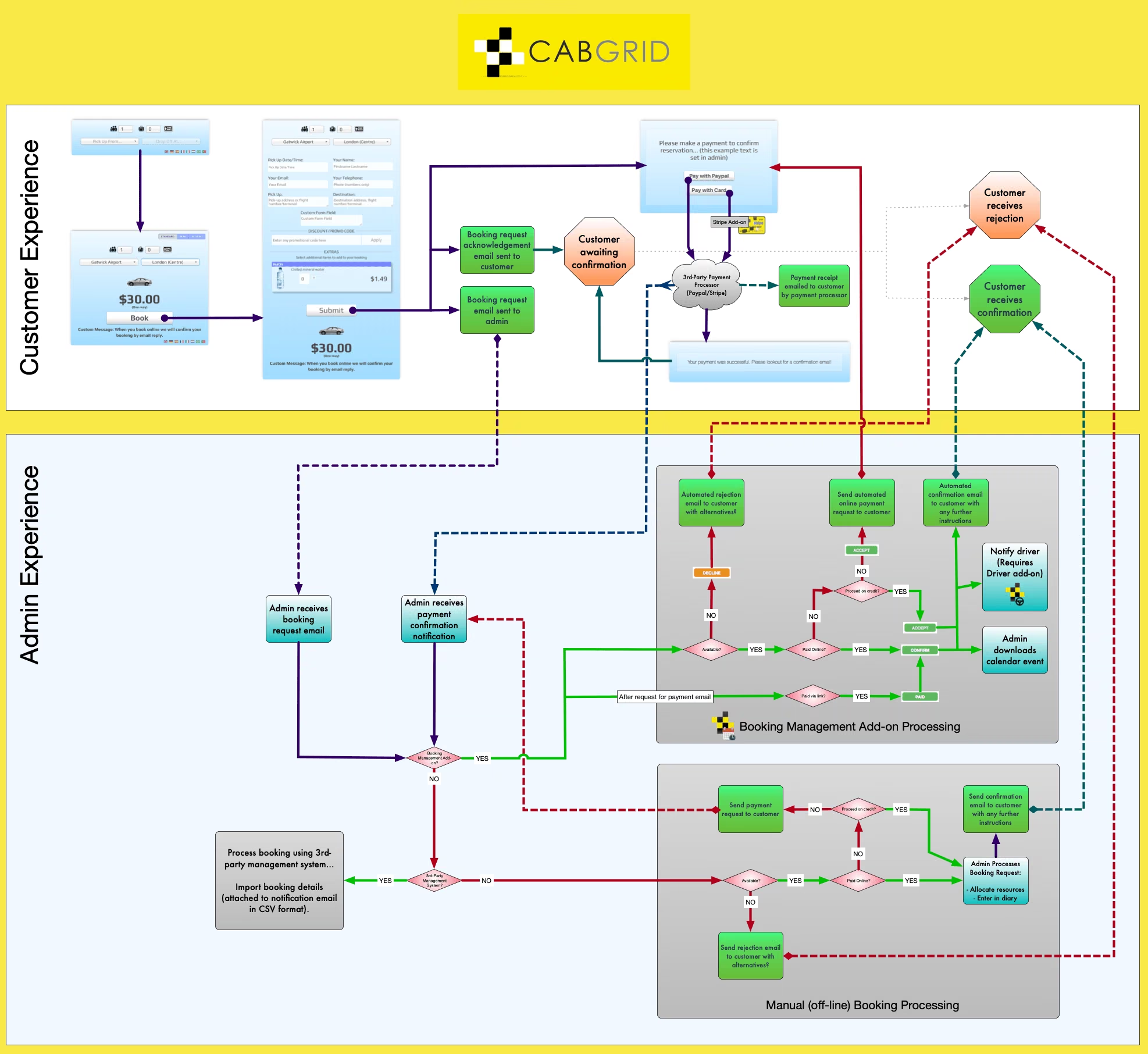
Automatically Accept CabGrid Booking Requests
The Booking Management add-on cannot automatically accept or confirm bookings. However, it is possible to give this illusion to your customer by re-wording the email and messages shown during the booking process…
Add your logo to taxi booking notification emails
How to add a logo or image to notification emails sent from CabGrid Pro or the CabGrid Booking Management add-on
Invoicing, Accounting and Bookkeeping with CabGrid
CabGrid features to help with accounting, bookkeeping and invoicing customers.

Booking form unexpectedly shows mandatory information missing
Problem: when trying to summit a booking, the message “Mandatory information missing or invalid. Invalid fields have been highlighted.” always appears, even when all required fields are completed.


Question regarding the “Passengers” model.
Is it possible to show the suitable vehicle(s) instantly when the number of passengers is printed in the field?
So the customer maybe can choose the vehicle ?
For example the customer want to book a larger vehicle than neccessary, and is willing to pay the higher price.
Custom CSS avaliable?
Not really – that’s what the vehicle layout is for.
Where is hourly option cab grid .I see in demo but in actual download
You need to do this by adding the layout attribute to the shortcode, like this:
[cabGridPro layout="time"]
See https://cabgrid.com/help-and-support/cab-grid-pro-shortcode-attributes/